Is Your Car Haunted? 9 Creepy Noises and What They Mean

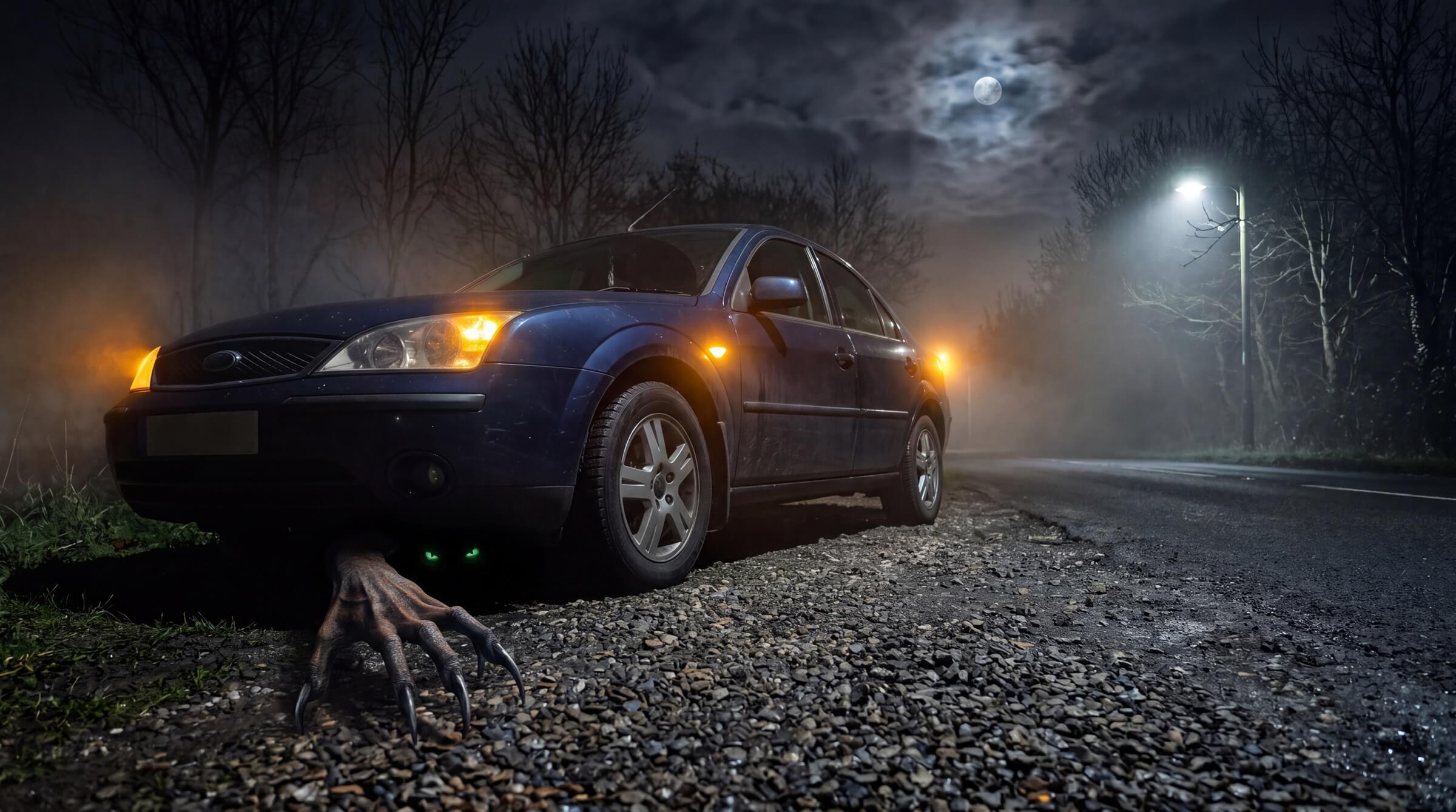
It's late. The road is dark. And somewhere under your car, something starts to scrape.
Most drivers know the move: a new noise shows up, you turn the radio up a little, and you hope it goes away on its own. Sometimes it does. More often it gets louder, and the repair gets bigger along with it.
That habit is more common than ever. In a survey published in October 2026, Midas found that 66% of U.S. drivers could not afford an unexpected $500 repair, and 53% had delayed or skipped recommended maintenance in the past year. That is a lot of cars quietly getting scarier.
The good news is that most car noises are easier to decode than a ghost story. Here are nine of the creepiest, what usually causes each one, and how worried you should be.
👻 The Scare Scale
Every noise below gets a rating, so you know whether to make a shop appointment or pull over now.
👻 Spooky. Not an emergency, but get it looked at soon, before it turns into something bigger.
👻👻 Creepy. Get it checked this week. Driving on it for long can make the damage, and the bill, worse.
💀 Terrifying. Stop driving as soon as it is safe and get help. These are the noises tied to your brakes, tires or the engine itself.
🔊 9 Creepy Noises and What They Mean
1. The Banshee: Squealing When You Brake
Scare level: 👻👻 Creepy
A high-pitched squeal or screech when you press the brake pedal usually means your brake pads are wearing thin. Many pads carry a small metal wear indicator that is designed to squeal as the friction material gets low. It is an alarm, and it is doing its job. AAA lists squealing or grinding when braking as a sign of worn pads that need prompt attention.
What to do: Schedule a brake check as soon as you notice it. Catch it at the squeal and you stay ahead of the next noise on this list.
2. The Coffin Lid: Grinding When You Brake
Scare level: 💀 Terrifying
If the squeal has turned into a harsh grinding or scraping, the pad material is likely worn through and metal is now rubbing against metal. Braking may already be compromised.
What to do: Stop driving and have the car checked. Grinding brakes are not a wait-and-see noise.
3. The Phantom Hum: Humming or Growling From the Wheels
Scare level: 👻👻 Creepy
A low hum or growl that gets louder as you speed up often points to a worn wheel bearing, or to tires that have worn unevenly in a pattern called cupping. It is easy to dismiss because it sounds like road noise at first. Mavis calls ignoring a failing wheel bearing downright dangerous.
What to do: Have the bearings and tires checked, and tell the shop the speed where the hum starts.
4. The Skeleton Click: Clicking When You Turn
Scare level: 👻👻 Creepy
A rapid click, click, click when you turn sharply, like pulling out of a parking space, usually comes from a worn CV (constant velocity) joint on the axles that deliver power to your wheels. These joints often wear out after the rubber boot around them tears and lets the grease escape.
What to do: Get it checked as soon as possible, before the wear goes further.
5. The Knock at the Door: Engine Knocking
Scare level: 💀 Terrifying
A rhythmic tapping or knocking from the engine is one nobody should ignore. Causes range from low oil and bad fuel to mistimed ignition and worn internal bearings. Mavis ranks it among the most serious noises a car can make, because it can lead to damage the engine does not recover from.
What to do: Once the engine has cooled, check the oil level. Whatever the dipstick says, get the car to a professional right away.
6. The Wail: Squealing Under the Hood
Scare level: 👻 Spooky
A squeal from the engine bay is usually a worn or loose serpentine belt. That one belt drives the alternator, the AC compressor and, on many cars, the power steering pump, so it matters more than its size suggests.
What to do: Don't panic, but don't ignore it either. Have the belt checked at your next shop visit, and sooner if the squeal gets worse.
7. The Moan: Whining When You Steer
Scare level: 👻👻 Creepy
A whine or moan when you turn the steering wheel usually means low power steering fluid, a failing pump or worn hoses. Left alone, steering can get stiff and harder to control, which is not something you want to discover halfway through a turn.
What to do: Get the steering system checked soon.
8. The Rattling Chains: Rattling Underneath
Scare level: 👻 Spooky
A tinny rattle from under the car usually traces back to the exhaust: a loose heat shield, a broken hanger, a damaged catalytic converter or a broken baffle inside the muffler.
What to do: It is rarely an emergency, but it can grow into a bigger and costlier problem, so have it looked at on your next shop visit.
9. The Thump in the Night: Rhythmic Thumping or Flapping
Scare level: 💀 Terrifying
A thump or flap that keeps time with your speed usually means a tire problem: something stuck in the tread, or damage from a pothole. Blowouts are possible.
What to do: Pull over somewhere safe and look at your tires right away. If you see a bulge, a gash or something embedded in the tread, put on the spare or call for roadside help.
📋 Cheat Sheet: Noise, Cause and Scare Level
| Noise | Likely cause | Scare level |
|---|---|---|
| Squealing when you brake | Worn brake pads | 👻👻 Creepy |
| Grinding when you brake | Pads worn through, metal on metal | 💀 Terrifying |
| Humming that rises with speed | Wheel bearing or uneven tire wear | 👻👻 Creepy |
| Clicking when you turn | Worn CV joint | 👻👻 Creepy |
| Engine knocking | Low oil, bad fuel, timing or worn bearings | 💀 Terrifying |
| Squealing under the hood | Worn or loose serpentine belt | 👻 Spooky |
| Whining when you steer | Power steering fluid, pump or hoses | 👻👻 Creepy |
| Rattling underneath | Loose exhaust part or heat shield | 👻 Spooky |
| Rhythmic thumping | Tire damage or debris | 💀 Terrifying |
👃 4 Smells From Beyond
Noises are not the only way a car tries to warn you. The Car Care Council flags these smells as signs that something needs attention:
Sweet, like syrup. A coolant leak somewhere in the cooling system. If you also hear hissing after you shut the engine off, or see steam, coolant may be dripping onto hot parts. Never open the radiator cap while the engine is hot.
Rotten eggs. The catalytic converter is not processing the exhaust properly. A poorly running engine can overload the converter until it fails.
Burning carpet. Brake trouble. The Car Care Council calls it a safety hazard, especially if you notice it during normal driving. Have the brakes checked right away.
Gasoline. A possible fuel leak, such as at a fuel injector line or the tank. Any smell of fuel is a potential fire hazard and needs attention immediately.
🔦 How to Track Down the Sound
A mechanic can diagnose a noise much faster when you can describe it. Before your appointment:
Note when it happens. Starting up cold, braking, turning, speeding up, going over bumps, or all the time.
Note where it comes from. Front or back, left or right, under the hood or under the car.
Record it. A short video on your phone, with the sound on, can save a lot of guesswork.
Check the dashboard. A noise that arrives with a warning light tells a bigger story. Our guide to dashboard warning lights explains what each one means.
Check for open recalls. If your noise lines up with a known defect, recall repairs are free. You can check your car for recalls by VIN in a few minutes.
Searching online is a fine first step. The same Midas survey found that when a warning light comes on, 33% of drivers start by researching a fix online, while 23% schedule service right away. Just don't let the search replace the shop visit for anything in the terrifying column.
💸 When the Scariest Part Is the Repair Quote
Sometimes the noise is a small fix. A loose heat shield or a worn belt is not a reason to rethink your whole car.
But sometimes the noise is the start of a pattern. If your car is older, the mileage is high and the quote is starting to look like a real share of what the car is worth, it is time to step back. Our guide to whether to repair or replace your car walks through the math, and these signs it's time to sell can help you decide.
If you decide to move on, you do not have to fix the noise first. We Buy Any Car values cars with mechanical problems, not just cars in perfect shape. Start with a free online valuation, and the final offer reflects the condition we confirm at your appointment. Here is exactly how we calculate your car offer. And if your noise is in the terrifying column, ask about home pickup rather than driving it across town.
❓ Frequently Asked Questions
Not every strange sound is a monster. A squealing belt or a rattling heat shield is usually a quick fix, and catching problems early is the cheapest way to keep a car healthy. But if your car is starting to sound like a haunted house and the repair quotes keep getting scarier, you have options. We Buy Any Car starts with a free online valuation, the appointment takes about an hour, and you get instant secure payment by check, wire, ACH or Zelle.
Sources
Midas International via PR Newswire, Majority of U.S. Drivers Report They Can't Afford an Unexpected $500 Car Repair, October 6, 2026: survey of 1,000 U.S. drivers; 66% could not afford a $500 repair, 53% delayed or skipped maintenance in the past year, and 33% research a fix online first when a warning light comes on.
Mavis Tires and Brakes, Dan Krauss, 10 Car Noises You Should Never Ignore, January 8, 2026: causes and urgency for brake, wheel bearing, CV joint, engine, belt, steering, exhaust and tire noises.
AAA Club Alliance, Car Warning Signs You Should Never Ignore, February 26, 2026: squealing or grinding when braking as a sign of worn pads that need prompt attention.
AutoInc. (Automotive Service Association) and the Car Care Council, Your Nose Knows: Six vehicle warning signs you can smell, May 21, 2020: sweet, rotten egg, burning carpet and gasoline smells, their causes and safety warnings.