The Car of the Year Curse: Only 5 of the Last 13 Winners Hold Their Value

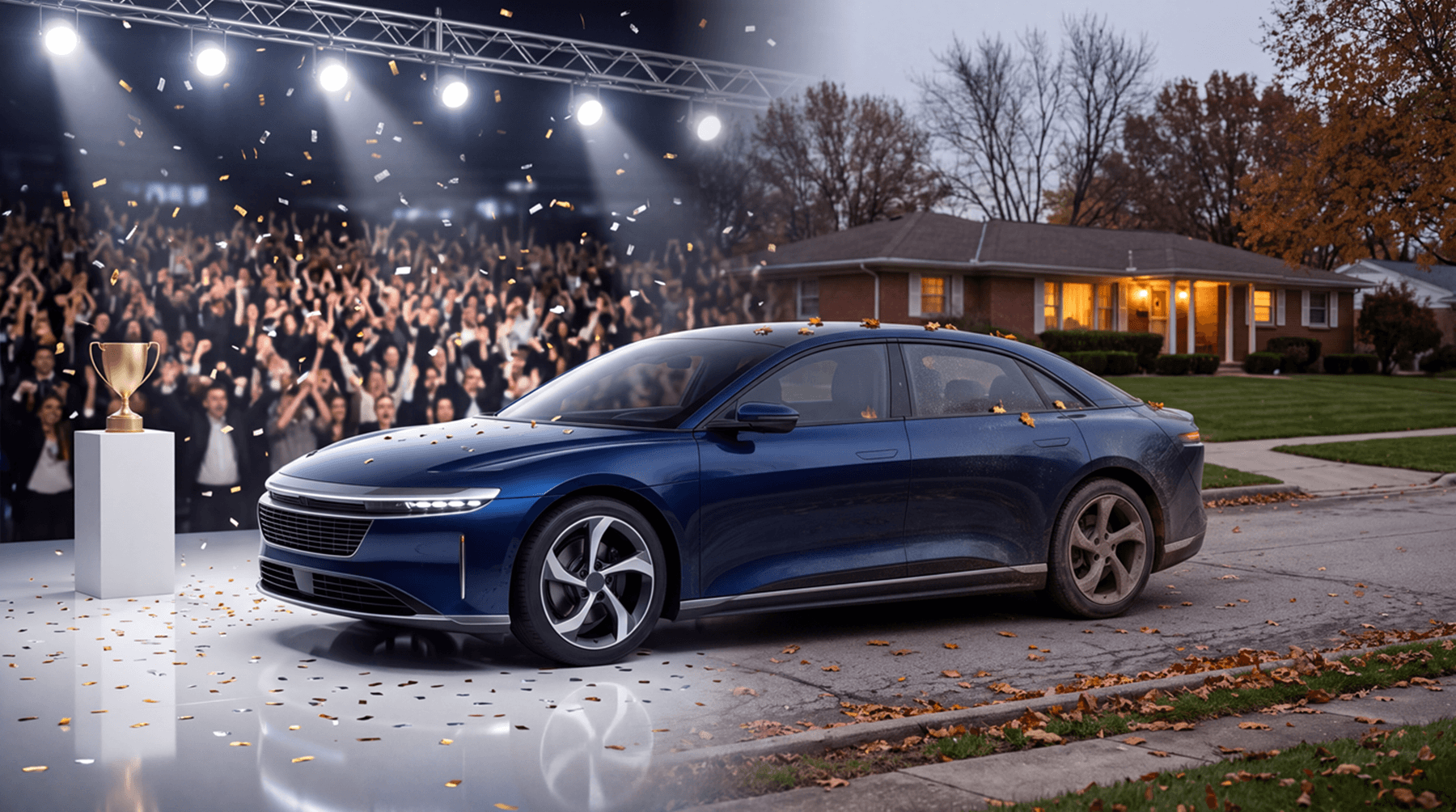
⚡ Quick Summary: MotorTrend named the 2027 Mercedes-Benz S-Class its Car of the Year on October 20. We looked at every winner going back to 2015 and checked how much each one loses in its first five years. Only five beat the average car. The trophy tells you a lot about how good a car is on day one. It tells you very little about what it will be worth when you sell it.
Every fall, MotorTrend's judges drive a field of brand-new cars, score them on everything from engineering to value, and crown one Car of the Year. It is one of the most recognized awards in the car world, and winners wear it proudly in their ads for years.
But nobody owns a car for one day. The judges see a car at its shiniest, on its first day. Owners live with it for years, and at some point most of them sell it. So we asked a different question: once the confetti settles, how well do these winners actually hold their value?
How we measured it. We used resale data from iSeeCars, which analyzed more than 15 million vehicles to calculate how much each model loses over its first five years.2 That puts every winner on equal footing, whether it won in 2017 or last week. The benchmark: the average vehicle loses 41.7% of its value in five years, keeping 58.3%. Each figure is iSeeCars' five-year estimate for that model, based on how earlier model years have depreciated. For the newest winners, like the 2027 S-Class, that history is the best preview available. These are model-wide averages, so any one car's value will still depend on its mileage, condition and options.
🏆 The 2027 Winner: Mercedes-Benz S-Class
MotorTrend announced the 2027 Mercedes-Benz S-Class as its Car of the Year on October 20, 2026.1 Judges pointed to its engineering, technology and interior comfort. The updated flagship adds a new twin-turbo V8 with mild-hybrid assist, new driver-assistance systems, a refined ride and an AI voice assistant. Its sticker price runs well into six figures.
Here is the part the trophy doesn't mention. Based on iSeeCars data, the S-Class loses 55.3% of its value in five years.2 That is 13.6 points worse than the average car. Put simply, more than half of what a buyer pays is likely to be gone by year five.
To be fair to the S-Class, that is about normal for its class. Luxury large cars as a group lose 54.0% in five years.2 This isn't a knock on the car. It is how the luxury flagship segment works, and it is a pattern you'll see across this list.
📊 How Every Winner Since 2015 Holds Its Value
Here is every MotorTrend Car of the Year from 2015 through 2027,1, 3 ranked by how much value each model keeps after five years.2, 4 The average car keeps 58.3%.
| Won | Car | Lost in 5 years | Value kept | vs. average car |
|---|---|---|---|---|
| 2020 | Chevrolet Corvette | 17.9% | 82.1% | ✅ Beats it |
| 2016 | Chevrolet Camaro | 18.7% | 81.3% | ✅ Beats it |
| 2024 | Toyota Prius | 32.9% | 67.1% | ✅ Beats it |
| 2026 | Volkswagen Golf GTI / Golf R | 38.6% / 39.2% | 61.4% / 60.8% | ✅ Beats it |
| 2015 | Volkswagen Golf | 38.7% | 61.3% | ✅ Beats it |
| 2019 | Genesis G70 | 44.1% | 55.9% | ➖ Close to average |
| 2021 & 2025 | Mercedes-Benz E-Class | 51.5% | 48.5% | ❌ Trails it |
| 2018 | Alfa Romeo Giulia | 52.2% | 47.8% | ❌ Trails it |
| 2023 | Genesis G90 | 52.4% | 47.6% | ❌ Trails it |
| 2027 | Mercedes-Benz S-Class | 55.3% | 44.7% | ❌ Trails it |
| 2017 | Chevrolet Bolt EV | 63.0% | 37.0% | ❌ Trails it |
| 2022 | Lucid Air | 63.4% | 36.6% | ❌ Trails it |
The E-Class won twice, in 2021 and 2025, so 13 awards cover 12 models. "Close to average" means within 3 points of the average car.
Five winners beat the average car. One, the Genesis G70, lands close to it. And seven of the 13 awards went to cars that lose noticeably more than average, including this year's winner.
📈 The Winners That Held Up
2020 Chevrolet Corvette: the clear champion
The Corvette keeps 82.1% of its value after five years, losing just 17.9%.2 That beats the average car by almost 24 points and even beats other luxury sports cars, which lose 21.6% as a group. The mid-engine redesign that won over the judges in 2020 won over used buyers too, and that demand hasn't let up.
2016 Chevrolet Camaro: a close second
The Camaro coupe keeps 81.3% of its value after five years, losing just 18.7%.4 That puts it right behind the Corvette and far ahead of the average car. Chevrolet built its last Camaro for the 2024 model year, so there are no new ones coming, and buyers who want one have to shop used.7
2024 Toyota Prius: practical pays off
The Prius loses 32.9% in five years and keeps about two-thirds of its value.2 That is right in line with other compact hybrids (32.6%) and well ahead of the average car. A strong reputation for reliability, plus steady demand for fuel-efficient cars, keeps used buyers lining up.
2015 and 2026 Volkswagen Golf: a two-time winner that holds up
The Golf won in 2015, and the Golf GTI and Golf R won again last year. All three beat the average car: the Golf loses 38.7% over five years, the GTI 38.6% and the Golf R 39.2%.2, 4 Practical, fun-to-drive hatchbacks with a loyal following tend to find eager second owners.
Right in the middle: 2019 Genesis G70
The G70 loses 44.1% over five years, a little more than the average car.2 But it is basically even with other luxury compact cars (44.7%), so it holds its own in a tough segment.
📉 The Winners That Took a Hit
2017 Chevrolet Bolt EV: a recall-sized dent
The Bolt EV loses 63.0% of its value in five years, the second-biggest drop of any winner on the list.4 It was a breakthrough affordable EV when it won. Then, in August 2021, GM expanded a battery fire recall to cover every Bolt built from 2017 through 2022.6 A recall that size can shake used buyers' confidence in a whole model, on top of how quickly early EV technology aged.
2022 Lucid Air: the steepest drop
The Lucid Air loses 63.4% in five years, the biggest drop of any winner on the list, compared with 51.2% for luxury electric midsize cars as a group.2 One real-world example makes it concrete: a 2022 Lucid Air Dream Edition Performance with a $170,500 window sticker and 22,000 miles sold at auction for $67,067, roughly 61% below what it cost new, after about four years.5
Mercedes-Benz E-Class, Alfa Romeo Giulia and Genesis G90
The two-time winning E-Class loses 51.5% in five years, against 46.0% for luxury midsize cars.2 The 2018 Alfa Romeo Giulia loses 52.2%, against 44.7% for luxury compact cars. The Genesis G90 loses 52.4%, which sounds steep, but luxury large cars lose 54.0% on average. That means the G90 actually holds value slightly better than its own class. It just competes in a class where everyone loses big.
🔍 Why the Trophy Doesn't Predict Resale Value
A Car of the Year award judges a car as a new purchase. Resale value is decided years later by a completely different crowd: used car buyers. Here is what really moves the number.
The segment sets the baseline. Before you look at any individual car, the type of car does most of the work. Luxury large cars lose 54.0% in five years on average, while luxury sports cars lose 21.6%.2 A flagship sedan starts the race with a handicap no award can fix.
The next buyer matters more than the first. The people who buy a $100,000+ sedan new are a different crowd from the people shopping for a five-year-old one. Used shoppers think about repair costs once the factory warranty runs out, and that pool of buyers is smaller.
Technology ages fastest. The cutting-edge screens, software and powertrains that impress judges are often the first things to feel dated. That is especially true for EVs, where range and charging improve quickly from one model year to the next.
Reputation can change overnight. A major recall, like the Bolt's battery campaign, can weigh on an entire model's value no matter how good it looked at launch.
Demand never sleeps. The winners that held up, the Corvette, the Camaro, the Prius and the Golf family, all have something used buyers keep looking for: excitement, efficiency or a loyal fan base.
🚗 What This Means for the Car in Your Driveway
You can't change the class your car belongs to, but you can know where it stands. If you drive a luxury sedan or an EV, values tend to fall faster in the early years, so when you sell can matter as much as what you sell. If you drive something with strong used demand, you may have more flexibility on timing.
For a closer look at how depreciation works year by year, read our guide on how much value your car loses each year. And if you're on the fence about keeping your car, our list of signs it's time to sell can help you decide.
One thing to keep in mind: the figures in this article are third-party, model-wide averages. They aren't a quote from us, and they can't tell you what any one car will sell for. Two cars of the same model can be worth very different amounts depending on mileage, condition, history and the market on the day you sell.
That's why the simplest step is to find out what your car is worth today. A free online valuation takes just a few minutes, and it gives you a real number to plan around, whether you sell this month or next year.
❓ Frequently Asked Questions
What is the 2027 MotorTrend Car of the Year?
The 2027 Mercedes-Benz S-Class. MotorTrend announced it on October 20, 2026, citing its engineering, technology and interior comfort.
Do Car of the Year winners hold their value?
Mostly not better than average. Of the 13 MotorTrend Car of the Year awards from 2015 through 2027, only five went to models that hold value better than the average car over five years: the Chevrolet Corvette, the Chevrolet Camaro, the Toyota Prius, the Volkswagen Golf and the Volkswagen Golf GTI and Golf R.
Which Car of the Year winner holds its value best?
The 2020 Chevrolet Corvette. Based on iSeeCars data, it loses just 17.9% of its value in five years, keeping 82.1%.
Which Car of the Year winner loses the most value?
The 2022 Lucid Air, which loses 63.4% in five years, followed closely by the 2017 Chevrolet Bolt EV at 63.0%.
How much does the average car lose in five years?
About 41.7% of its original value, according to iSeeCars' analysis of more than 15 million vehicles.
Will the 2027 Mercedes-Benz S-Class hold its value?
If history is a guide, expect it to lose a little more than half its value over five years. iSeeCars puts the S-Class at 55.3%, which is about normal for luxury large cars as a group.
A trophy is a great way to judge a new car. When it is time to sell, what matters is what your car is worth today. Start with a free online valuation and visit one of our locations when the timing works for you.
Sources
MotorTrend 2027 Car of the Year announcement, as reported by Automotive Addicts (Oct. 20, 2026), Ground News and CBS Austin (Oct. 22, 2026).
iSeeCars resale value and depreciation data (analysis of 15 million+ vehicles; five-year depreciation with segment and all-vehicle comparisons): Mercedes-Benz S-Class, Chevrolet Corvette, Toyota Prius, Volkswagen Golf GTI, Volkswagen Golf R, Genesis G70, Genesis G90, Mercedes-Benz E-Class, Alfa Romeo Giulia, Lucid Air.
Motor Trend Car of the Year, list of past winners.
iSeeCars brand resale value rankings for discontinued winners (same five-year data): Chevrolet (Camaro, Bolt EV), Volkswagen (Golf).
Carscoops, 2022 Lucid Air depreciation (March 15, 2026).
ClickOnDetroit, GM extends recall to cover all Chevy Bolts due to fire risk (Aug. 20, 2021).
Motor1, The final Chevy Camaro has been built (Dec. 2023).