Properly signing your Rhode Island vehicle title is one of the most important parts of a legal sale. Use the steps below as your guide. If you're working with a dealer, ask them how they want the title handled before you sign.
1. Verify Your Title
Check that the title is currently in your name and that all printed details are accurate. If you can't locate the title, or it's been damaged, you'll need to apply for a duplicate through the Rhode Island DMV before continuing with the sale.
2. Notarization Is Not Required
In a standard private sale, Rhode Island does not require notarization of the seller's signature on the title. Both parties simply need to sign the title itself. Notarization is generally only needed in unusual cases, such as when a representative is signing under a Power of Attorney — contact the Rhode Island DMV if you're uncertain.
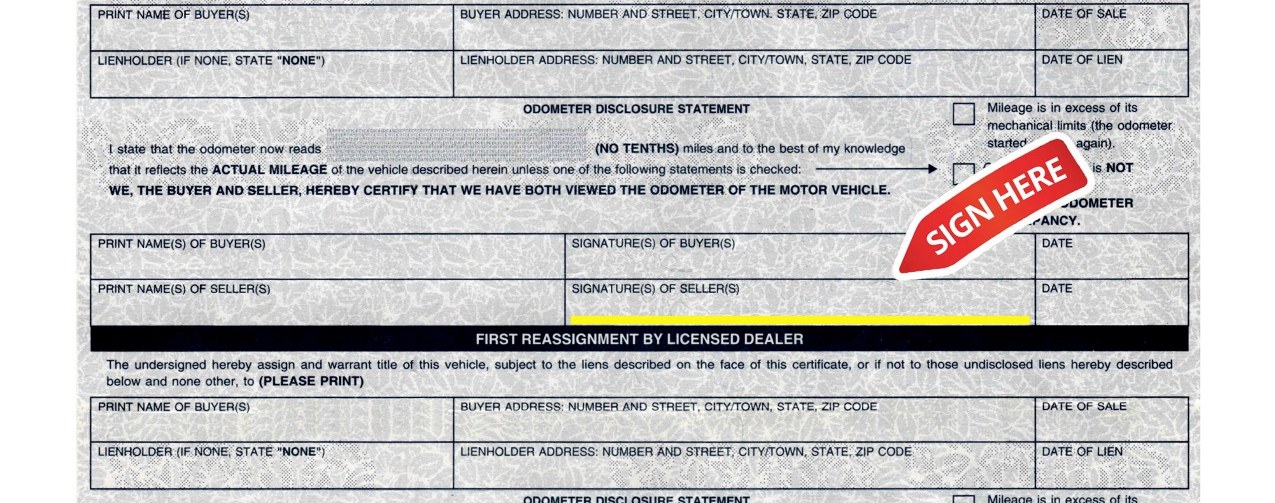
3. Complete the Seller Information on the Back of the Title
On the reverse side of the title, you'll find the seller's section that needs to be completed accurately:
- Seller's Signature: Sign in the box labeled for the seller's signature. All owners listed on the title must sign.
- Printed Name of Seller: Print your name exactly as it appears on the title.
- Buyer Information: Provide the buyer's full name and address in the designated section.
- Odometer Reading: Provide the vehicle's accurate mileage at the time of sale, ensuring this information is filled in correctly without errors. It is important to not guess this number, and record an exact mileage number.
Important: Never apply white-out, scribble through information, or attempt corrections on a title — any of these will invalidate it.
4. Address Liens
Any active lien listed on the title must be cleared before the sale can complete. The lienholder either needs to sign off on the title or supply a lien release letter. Don't attempt to transfer the title until this is resolved.
5. Consider Multiple Owners
Multiple owners on a title? The connector between names tells you whether one or both signatures are required:
- "AND": Both owners are required to sign.
- "OR": Only one owner needs to sign.
Important: Rhode Island generally does not require a title for vehicles model year 2000 or older (or 20 years old or older). For these vehicles, ownership is transferred using a bill of sale and the prior registration.
Key Takeaways
- Notarization is not required for a standard private sale.
- Ensure all signatures match exactly as they appear on the title.
- Address any existing liens before proceeding.
Sticking to this process keeps your Rhode Island sale legal and prevents costly title rejections. For more information, see the Rhode Island DMV website.
Verified May 2026