Follow these steps to ensure a smooth and legal transfer of vehicle ownership in Indiana.
1. Verify Your Title
Before selling your vehicle in Indiana, confirm that the title is in your name and free of errors. If your title is lost or damaged, you’ll need to request a duplicate title through the Indiana Bureau of Motor Vehicles (BMV) before proceeding.
2. Sign the Title Correctly
Indiana does not require notarization for private vehicle sales. However, the seller must complete the title accurately. On the back of the title, fill out the following:
Seller’s Signature: Sign in the designated "Signature of Seller" section.
Printed Name of Seller: Print your name exactly as it appears on the title.
Odometer Disclosure: Required for vehicles less than 10 years old. Enter the mileage at the time of sale.
Buyer’s Name and Address: Include the full legal name and address of the buyer.
Date of Sale
Sale Price
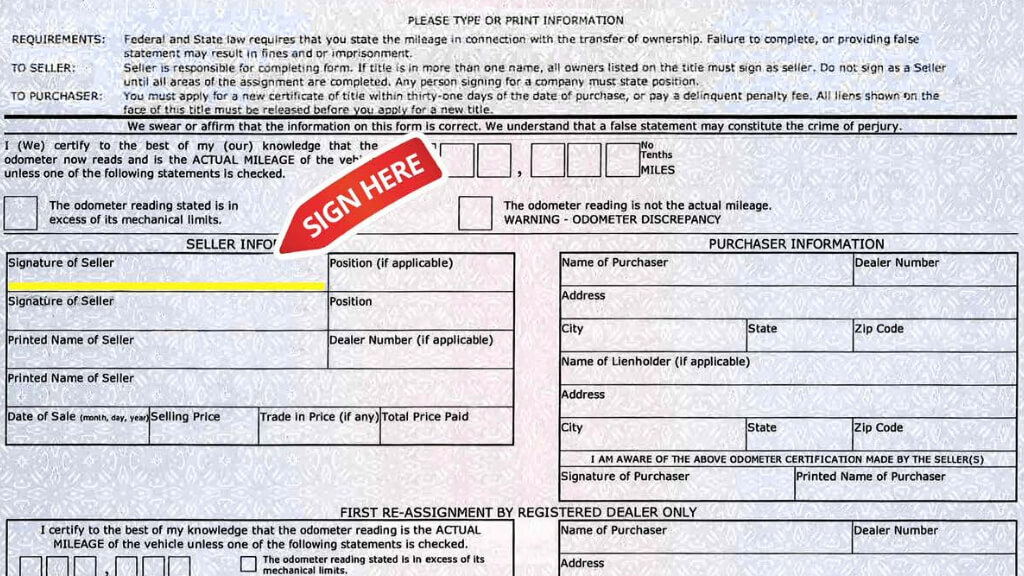
Important: Any mistakes may void the title. Do not use white-out or make alterations.
3. Address Any Liens
If there is a lien listed on the title, it must be released before selling. The lienholder can sign the release section on the title or provide an official lien release letter.
4. Provide a Bill of Sale
Although not required, it's recommended to complete a Bill of Sale (Form 44237) for recordkeeping. It documents the transaction details for both the buyer and seller.
Key Takeaways
Indiana does not require notarization for title transfers.
Accurately complete all fields on the back of the title.
Use a Bill of Sale (Form 44237) to document the transaction.
For full details and online services, visit the Indiana BMV website.
Selling a car titled in another state? See how to sign a car title in every state. For the paperwork beyond the title, see how do I sell my car in Indiana.