Deer Season Is Here: 1.7 Million Crashes a Year, and the 4 Mistakes Drivers Make After Impact

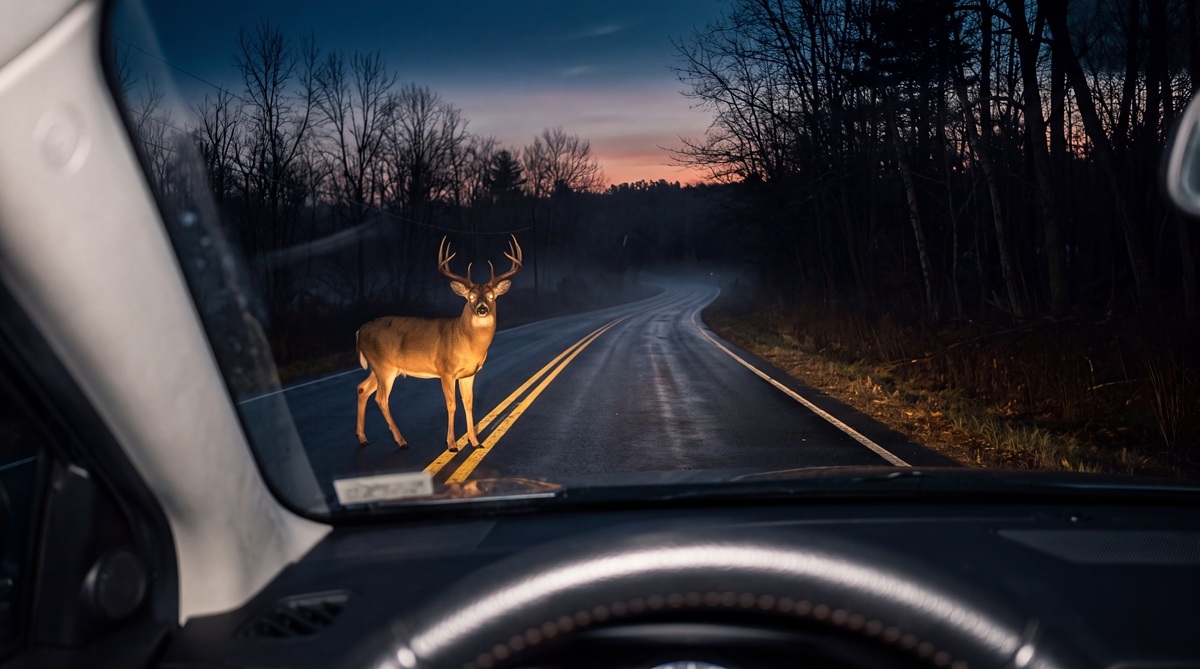
It happens in about a second and a half. A shape at the edge of your headlights, a flash of white tail, and then the sound. If you drive in most of the country, you've either hit a deer, come within a few feet of one, or know someone who has.
The numbers back that up. State Farm's most recent report counted an estimated 1.7 million animal collision claims nationwide between July 2024 and June 2025, and deer were the animal involved more than any other, at roughly 1.1 million. The national odds of hitting an animal in any given year are about 1 in 139. And those odds get much worse for the next three months.
Here's why fall is the danger zone, what drivers keep getting wrong once the deer is already in the grille, and how to think about the repair bill that follows.
🦌 Why Fall Is Deer Season for Drivers
Deer collisions aren't spread evenly across the year. October, November, and December account for about 650,000 claims, or 41% of the annual total, according to State Farm. November is the single worst month. Insurance Institute for Highway Safety (IIHS) data shows November claim frequency runs more than twice the yearly average.
The reason is biology. Fall is mating season, and deer that spend most of the year in predictable patterns start moving farther, faster, and at stranger hours. Bucks chase does across roads they'd normally avoid. Add in shorter days, so more commuting happens in the dark, and you get a three-month stretch where the odds stack against you.
Timing matters within the day, too. Deer are most active from dusk to dawn, with a pronounced spike between roughly 6 p.m. and 9 p.m. That window now lines up almost perfectly with the evening commute.
Where you live changes the picture dramatically. A driver in West Virginia is roughly 24 times more likely to hit an animal than a driver in Nevada. If you're in the Northeast, the Midwest, or the Appalachian corridor, the next three months are the riskiest driving you'll do all year.
These crashes aren't just expensive. IIHS counted 210 deaths in crashes involving collisions with animals in 2024, and many of those weren't caused by the animal itself. They were caused by what the driver did next.
🚗 The 4 Mistakes Drivers Make After Impact
Most of the advice about deer focuses on avoiding them. Less of it covers the part that actually determines how much this costs you: the roughly ten minutes that start when you see the deer and end when you pull back onto the road. Here are the four mistakes that show up again and again.
1. Swerving at the last second
Technically this one happens a half second before impact, but it decides everything that follows, so it belongs at the top of the list.
Your instinct will be to yank the wheel. Don't. A deer weighs somewhere between 100 and 300 pounds. A tree, a guardrail, or an oncoming pickup weighs a lot more. IIHS notes that about 20% of all motor vehicle crash deaths involve a vehicle leaving the road and hitting something fixed. Swerving trades a damaged bumper for a much worse outcome.
There's a financial angle, too. Hitting the deer is a comprehensive claim. Swerving to miss the deer and hitting a car, a pole, or a ditch is a collision claim, and in most cases you'll be considered at fault. Same deer, very different paperwork.
The right move: brake hard, brake straight, keep both hands on the wheel, and stay in your lane. Where there's one deer there are usually more, so keep braking after the first one clears.
2. Getting out to check on the deer
This is the mistake people make out of decency, and it's the one most likely to get someone killed.
An injured deer is frightened, strong, and unpredictable. Hooves and antlers do real damage. Beyond the animal, you're now a person standing on or near a dark road, often on a curve or a hill, exactly the kind of place deer cross because drivers can't see far. The second collision, the one where another car hits you or your stopped vehicle, is the real risk.
Pull as far off the road as the car will safely go, turn on your hazards, stay in the vehicle if it's safe to do so, and call the police or the non-emergency line. If the deer is in a travel lane, tell the dispatcher. Let them handle the animal.
3. Skipping the police report and the photos
Plenty of drivers look at a cracked headlight and a dented fender, decide it's not worth the hassle, and drive home. Then they change their minds a day later when the check-engine light comes on, and they have nothing to show the insurance company.
Get the report, even for damage that looks minor. In several states you're required to report a crash once damage crosses a dollar threshold, and deer damage crosses that threshold faster than you'd think. More importantly, a police report is what establishes that this was an animal strike, which is what keeps it in the comprehensive column rather than turning into an argument about fault.
While you wait, photograph everything: the damage, the road, the location, the deer if it's visible and you can do so from a safe spot, and any hair, blood, or debris on the car. That last part sounds grim, but it's the kind of evidence an adjuster looks for.
4. Assuming it's cosmetic and driving on
The fourth mistake is the one that shows up on the repair estimate. A deer strike concentrates a lot of force into a small area at the front of the car, and the front of a modern car is where the expensive parts live.
Behind that bumper cover sit the radiator, the condenser, the intercooler on turbocharged cars, and a growing collection of sensors and cameras for adaptive cruise, emergency braking, and lane-keeping. A cracked radiator can look fine in a parking lot and leave you stranded ten miles later. A knocked-out radar sensor can look like a scuffed grille and cost well over a thousand dollars to replace and recalibrate. Headlight assemblies on newer cars routinely run into four figures each.
Before you drive away, do a quick check: look for fluid under the car, make sure both headlights work, confirm the hood latches, and check that nothing is rubbing on a tire. If the airbags deployed, the car is not driveable, full stop. If anything is leaking or grinding, call for a tow. The cost of a tow is small next to the cost of an engine that ran dry.
🛡️ Who Pays: Comprehensive vs. Collision
This trips up a lot of people, so it's worth spelling out.
Damage from hitting an animal is covered under comprehensive coverage, the same part of your policy that handles theft, hail, falling branches, and flood. It is not a collision claim, even though it feels like one. Comprehensive is optional coverage, so if you carry liability only, the repair is coming out of your pocket.
You'll pay your comprehensive deductible, which is often lower than your collision deductible. In most states an animal strike is treated as a not-at-fault event, which means it typically won't raise your rates the way an at-fault crash would, though that varies by state and insurer. Our guide to how car insurance works walks through the difference between these coverages in more detail.
The exception is the swerve. If you avoided the deer and hit something else, that's collision coverage, you're likely at fault, and your rates may reflect it. This is the practical reason insurers repeat the same advice year after year: brake, don't swerve.
🔧 Repair It, Total It, or Sell It?
Deer claims are not cheap, and they're getting more expensive. IIHS found that the average animal strike claim in November ran about $4,600, the highest of any month, compared with roughly $3,500 in February. As cars have gained sensors, cameras, and LED lighting, the cost of a "minor" front-end hit has climbed with them.
That puts a lot of drivers in an awkward spot, especially with an older car. Once repair estimates approach the car's value, the insurer may declare it a total loss and pay you actual cash value minus your deductible. Every state sets its own threshold for that decision, and on a car worth $6,000, a $4,600 estimate gets there quickly.
Three things are worth knowing before you agree to anything:
Know what the car is worth first. The insurer's number for actual cash value is a starting point, not a verdict. Get an independent valuation so you know whether their offer is fair. Our guide to how much value your car loses each year explains how that number gets calculated in the first place.
A claim follows the car. Once you file, the damage becomes part of the vehicle's history and can appear on a history report. That doesn't stop you from selling, but it's something the next buyer will see, and it's a reason not to sink money into a car you were already thinking about moving on from.
You don't have to fix it to sell it. If the deer strike is the last straw on a car that was already aging out, you can skip the body shop entirely. webuyanycar.com buys cars as they are, including cars with front-end damage, cars with an open claim, and cars the insurer has already paid out on, provided you have a clean title to sell. If you're weighing whether to repair or replace an older car, that decision guide works through the math.
The point isn't that everyone should sell after a deer strike. Plenty of cars get repaired and go on for years. The point is that you have more than one option, and the moment you're deciding is exactly when it pays to know all of them.
💡 How to Lower Your Odds
You can't control the deer. You can control a few things that meaningfully change your risk.
Slow down in posted deer zones, and take them seriously. Those yellow signs mark places where deer have already been hit repeatedly. They aren't decoration.
Use your high beams whenever there's no oncoming traffic. Deer eyes reflect light well, and the extra distance is often the difference between braking and hitting.
Scan the shoulders, not just the road. Most deer are visible at the edge of the road for a second or two before they step out.
Expect a second deer. If one crosses, cover the brake and wait. Deer travel in groups, and the second one is usually the one people hit.
Skip the deer whistles. State Farm and IIHS both note there's no scientific evidence the car-mounted whistles do anything. Save the money.
Wear your seatbelt. Most deaths in animal collisions involve a secondary event like a rollover or a fixed object. A belt is what gets you through those.
❓ Frequently Asked Questions
The next three months are the worst of the year for deer on the road, and the odds are highest right when most people are driving home in the dark. Brake straight, stay in the car, get the report, and don't assume a dented bumper is the whole story. If the repair estimate turns into a bigger conversation about whether this car is worth keeping, you don't need to fix a thing first. webuyanycar.com buys cars as they are. Start with an online valuation and stop by one of our locations when the timing suits you.
Sources
State Farm newsroom, "New State Farm data reveals fewer animal collisions, but autumn months remain most dangerous," September 16, 2025: 1.7 million estimated animal collision claims (July 2024 through June 2025), national odds of 1 in 139, state-by-state odds, and October through December accounting for 41% of claims.
Insurance Institute for Highway Safety, "Dip in deer strikes poses a mystery for insurers ahead of peak season," October 2023: November claim frequency more than twice the yearly average; November average claim cost of about $4,600 versus $3,522 in February.
Insurance Institute for Highway Safety, Fatality Facts 2024, "Collisions with fixed objects and animals": 210 deaths in crashes involving collisions with animals in 2024.
Consumer Reports, "How to Avoid Collisions With Deer This Fall": approximately 1.1 million deer strikes within the 1.7 million animal collision claims, peak activity between 6 p.m. and 9 p.m., and the lack of evidence for deer whistles.
Progressive, "Does Insurance Cover Hitting a Deer?": comprehensive versus collision coverage and the effect of swerving on fault.