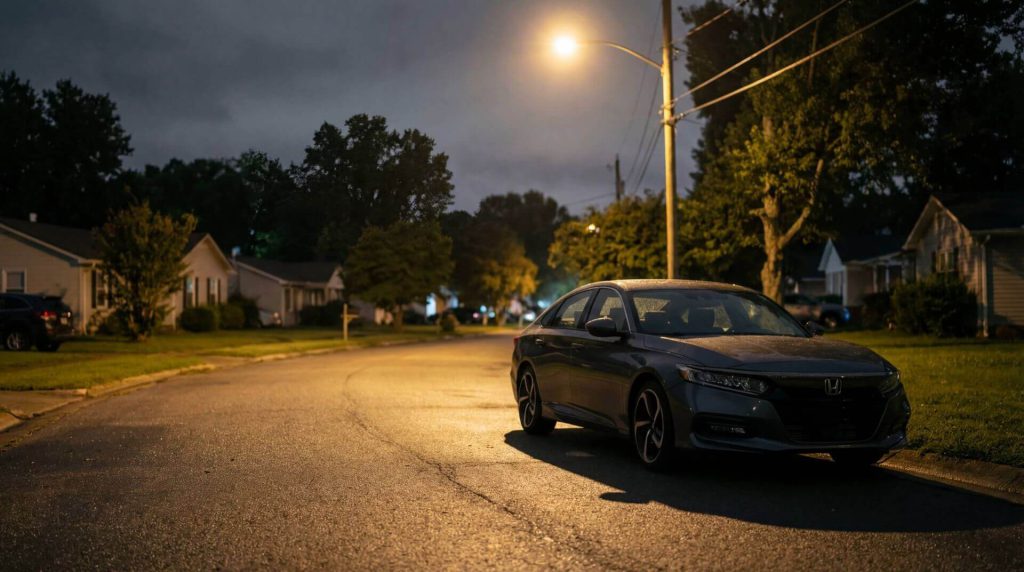
Vehicle theft in the U.S. is down in 2025, but a small group of very common cars still account for a disproportionate share of stolen vehicles. Using the latest industry data, this report breaks down the most stolen cars of the year, explains why certain models are targeted more often than others, and explores the broader trend behind today’s theft patterns. If you own a popular sedan or pickup, understanding this data — and how theft risk is becoming more concentrated — can help you make smarter decisions about protecting your vehicle.
TL;DR: Vehicle theft in the U.S. is down overall in 2025, but a small group of very common cars still account for a disproportionate share of thefts. Hyundai and Honda models dominate the list, largely because of popularity, resale demand, and — in some cases — known security weaknesses. If you own one of these vehicles, a few simple precautions can meaningfully reduce your risk.
There’s some good news: according to industry data and insurance crime reports, overall vehicle theft in the U.S. is down by roughly 23% compared to 2024. Better security technology, manufacturer updates, and increased awareness have helped push theft numbers lower.
But that improvement doesn’t tell the whole story.
The remaining theft problem is becoming more concentrated around a smaller group of vehicles — mostly extremely common sedans and pickups that are easy to resell, easy to part out, or (in some cases) easier to steal than newer models.
In other words: car theft is less random than it used to be — and some owners are carrying far more risk than others.
The Most Stolen Cars of 2025 (So Far)
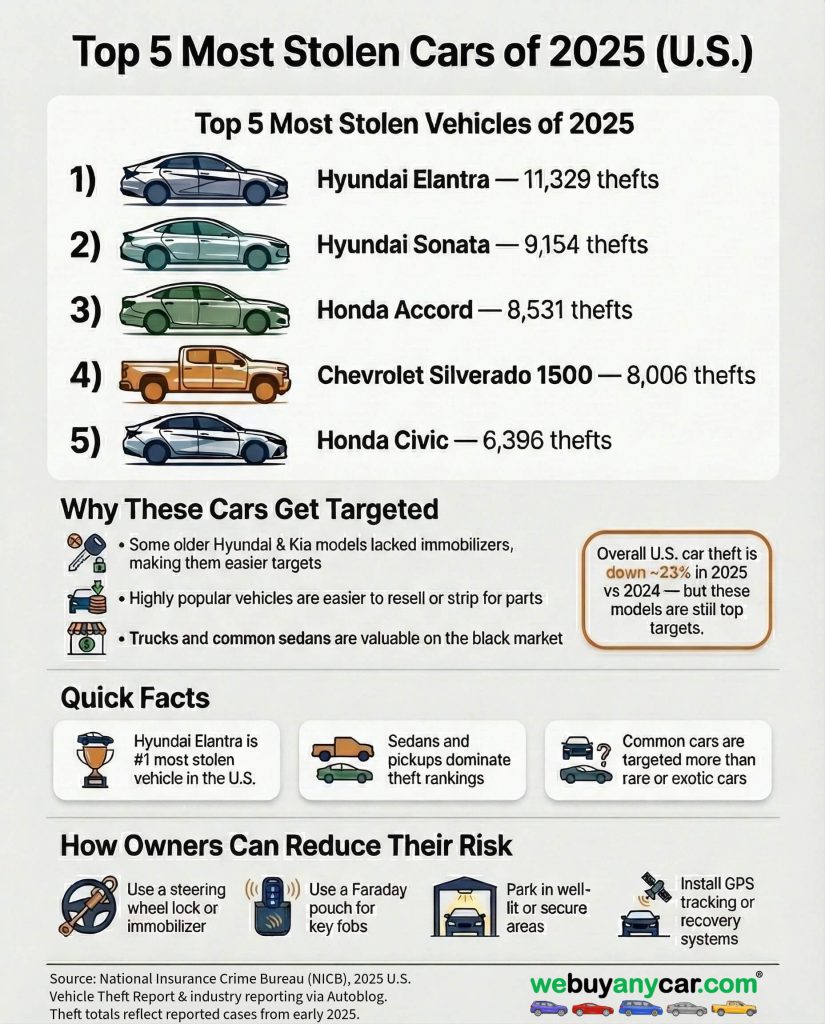
Based on the latest available U.S. theft reporting from the National Insurance Crime Bureau (NICB) and industry summaries, these are the most frequently stolen vehicles in 2025:
Rank
Vehicle
Estimated Thefts
1
Hyundai Elantra
11,329
2
Hyundai Sonata
9,154
3
Honda Accord
8,531
4
Chevrolet Silverado 1500
8,006
5
Honda Civic
6,396
What’s notable about this list?
These are all extremely common vehicles on U.S. roads.
They’re easy to resell or dismantle for parts.
Two of the top five are Hyundai sedans, which have been linked to well-documented security issues in certain model years.
Why Thieves Target These Cars
1. Popularity = Liquidity
The more common a vehicle is, the easier it is to resell or part out without raising suspicion. Parts like wheels, airbags, headlights, infotainment systems, and catalytic converters are always in demand for high-volume models.
2. Known Security Gaps in Some Older Models
Some Hyundai and Kia vehicles from past model years were built without engine immobilizers, making them far easier to steal using simple tools. Even though software updates and fixes have been rolled out, these vehicles still appear disproportionately in theft data.
3. Trucks Are Valuable for More Than Just the Vehicle
Full-size pickups like the Chevrolet Silverado are often targeted not just for resale, but also for the tools, equipment, and cargo they may be carrying.
The Big Trend: Fewer Thefts, But More Concentrated Risk
The overall decline in vehicle theft is real — but the remaining theft activity is increasingly focused on a narrower group of high-risk vehicles.
This means two important things can be true at once:
The average driver is less likely to experience theft than a year ago.
Owners of certain models face a much higher-than-average risk.
From a data perspective, theft is becoming less evenly distributed and more predictable.
How to Reduce Your Risk
No security measure is perfect, but layered protection dramatically reduces the chance that your car becomes an easy target.
Use a steering wheel lock or immobilizer: Visible deterrents often cause thieves to move on to easier targets.
Protect your key fob: A Faraday pouch can block relay attacks that amplify key signals.
Park smart: Well-lit, busy, or secured areas are far less attractive to thieves.
Consider GPS tracking: Recovery systems don’t prevent theft, but they greatly improve the odds of getting your car back.
Keep software updated: Some manufacturers offer security updates that close known vulnerabilities.
Frequently Asked Questions
Why are Hyundai and Kia vehicles stolen so often?
Certain older models lacked engine immobilizers, making them easier to steal. Even with fixes now available, those vehicles still appear heavily in theft statistics.
Is car theft really going down in 2025?
Yes. Industry data shows a roughly 23% decline compared to 2024, but theft is now more concentrated among specific high-risk models.
Are newer cars harder to steal?
In general, yes. Modern vehicles tend to have better immobilizers, encrypted keys, and more advanced security systems.
Do steering wheel locks actually work?
They don’t make theft impossible, but they do make it slower and more obvious — which is often enough to make thieves move on.
What should I do if my car is on this list?
Focus on visible deterrents, smart parking, and layered security. Reducing convenience for thieves is the goal.
Sources: National Insurance Crime Bureau (NICB), 2025 U.S. Vehicle Theft Report; industry reporting and summaries via Autoblog. Theft totals reflect reported cases from early 2025.
The 2026 used car market has slowed everywhere — but some vehicles are sitting on lots three times longer than average. Drawing on iSeeCars data, here are the five cars drivers are quietly moving on from this year, the patterns connecting them, and what it means if your car is one of them.
Not every SUV is built for the same kind of summer trip. Whether you’re chasing national parks, hauling the whole crew to the beach, or just trying to stretch every gallon, these five SUVs earn their spots on the open road — and each one is a match for a different kind of getaway.
If you’re shopping for a family SUV, you’re probably juggling the same priorities as everyone else: safety, usable space, comfort, good tech, and a layout that makes daily life easier (car seats, strollers, sports gear, grocery runs… all of it). This list focuses on the best all-around family SUVs—mixing two-row and three-row options—based on recurring top placements in major editorial rankings and family-vehicle award lists.
In 2025, electric vehicles stopped being a niche, high-end experiment and started looking a lot more like “normal cars” in terms of price and choice. Battery costs dropped, more mainstream brands launched compact and mid-size EVs, and the used EV market finally started to feel like a real segment rather than a curiosity. This recap looks at what actually changed in 2025, which models and vehicle types benefited most, and what it all means if you’re thinking about buying or selling a car in the next few years.
Curious about the top 5 convertibles of 2025? Here are the standout models that combine performance, style, and great driving experiences. Explore the best convertibles this year has to offer.
Looking for a reliable SUV? We’ve got you covered. In this article, you’ll find the top 5 reliable SUVs known for durability, low maintenance, and great performance. From rugged to spacious models, there’s something for everyone.