New car prices hover near $49,000 while used cars average around $25,000 — but the real cost difference is shaped by financing rates, insurance, and depreciation. For most buyers in 2026, a 3-to-5-year-old used car still wins on total cost. New makes sense in a few specific scenarios, and we’ll walk through both.
If you’re shopping for your next vehicle in 2026, you’ve probably noticed something uncomfortable: there’s no obvious winner anymore. New cars are hovering near record-high transaction prices. Used cars are still well above where they sat before the pandemic. And the financing math has shifted in ways that make the sticker-price gap less meaningful than it looks at first glance.
That makes the new-vs-used decision more complicated — and more important to get right. Below, we’ve broken down what the actual numbers look like in the current market, what’s driving them, and where each path makes sense depending on how you plan to drive, finance, and eventually move on from your next car.
📊 The 2026 Price Gap at a Glance
Start with the headline numbers. As of March 2026, the average transaction price for a new vehicle was about $49,275, while the average listing price for a used vehicle was around $25,390. That’s roughly a $24,000 gap — but the monthly cost difference, once you factor in financing, comes out closer to a couple hundred dollars a month for most buyers.
Here’s how the snapshot looks across the most-cited 2026 data points:
Metric
New Car (Average)
Used Car (Average)
Transaction / Listing Price
~$49,275
~$25,390
Monthly Payment
~$749
~$529
Average APR
~7%
~11%
Average Loan Term
69 months
~65 months
Sources: Kelley Blue Book / Cox Automotive (March 2026), Edmunds Q4 2025 and March 2026, Insurify 2026 average car cost report. Note: this snapshot reflects industry-average financed amounts and typical loan terms (69 months for new). The five-year cost scenario in Section 4 uses a 60-month illustrative loan with set down payments — that’s why the monthly figures differ between the two tables.
💸 What’s Pushing New Car Prices Higher
The headline new-car number has crept up year over year — about 3.5% above March 2025, an acceleration after roughly three years of essentially flat pricing as supply normalized post-pandemic. Cox Automotive notes that 3.5% is actually close to the industry’s long-run average, but it’s the first meaningful year-over-year jump in a while. A few forces are stacking on top of each other:
Tariffs and trade policy. Tariff changes have rippled through pricing differently for each automaker. Some have pledged to hold the line on prices, with increases trickling in at model-year changes. Others are adjusting on a rolling basis. The net effect is that imported components and finished vehicles are slowly getting more expensive to produce.
The shift toward bigger vehicles. Americans have continued to buy larger trucks and SUVs even as gas prices have climbed. In March 2026, the average full-size pickup transacted at about $65,964, and the average midsize SUV at $49,853. Compact SUVs averaged around $37,055 — still up year over year, but well below the headline number. The mix is dragging the overall average upward.
Tech and safety creep. Each new model year tends to add features that used to be optional or weren’t available at all. Advanced driver assistance, larger infotainment screens, over-the-air updates, and more sophisticated safety systems all add cost. This isn’t a 2026 phenomenon — it’s been a steady multi-decade trend, and it’s compounding.
The takeaway: even when incentives tick up slightly, the underlying price floor for new vehicles keeps rising. The deals aren’t meaningfully better than they were a year ago.
🚗 Why Used Cars Aren’t the Bargain They Used to Be
Used cars are cheaper than new — that part hasn’t changed. But the supply-and-demand picture in the used market has shifted in ways that keep prices stickier than buyers might expect.
Tight inventory. Used vehicle days of supply dropped to about 37 days in March 2026, down from a year earlier, with inventory volume hitting its lowest level on record even as sales increased. When fewer cars are sitting on lots, prices don’t drop the way they might in a softer market.
Fewer lease returns. Lease returns are one of the main pipelines for late-model used cars hitting the market. That pipeline has been thinner for a couple of years, and while it’s expected to rebound through 2026, the recovery is gradual.
Demand has shifted toward used. Buyers priced out of the new market have turned to near-new used vehicles in a major way. According to a CarGurus industry analysis, sales of model year 2024-or-later used vehicles jumped roughly 24% in Q1 2026 compared with Q1 2025 — note that’s the near-new segment specifically, not the used market overall. Sub-$30,000 used vehicles are moving fastest of all, a clear signal that affordability is the dominant factor right now.
If you’re cross-shopping, it’s worth understanding how depreciation works in this environment. We covered this in detail in our post on how much value your car loses each year — and that math is what makes the used-car case complicated in 2026.
💰 Beyond the Sticker: The True Cost of Each
Sticker price is the headline. Total cost of ownership is the actual story. Here’s a simplified five-year comparison using current-market averages — financing only, no insurance or maintenance differences yet:
Scenario
New Car ($49K)
Used Car ($25K, 3 yrs old)
Down Payment
$5,000
$3,000
Amount Financed
$44,000 at 7% / 60 mo
$22,000 at 11% / 60 mo
Approximate Monthly Payment
$871
$478
Total Interest Paid
~$8,300
~$6,700
Estimated Year-1 Depreciation
~$10,000+ (20%+)
~$2,500 (10%)
Five-Year Out-of-Pocket (est.)
~$57,300
~$31,700
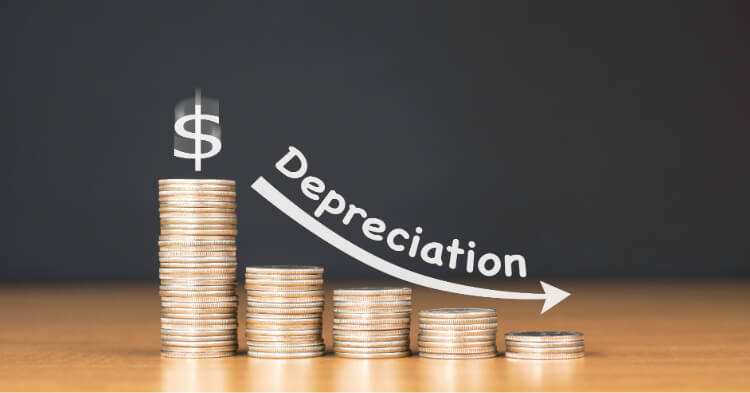
A few things worth noting in that table. First, used-car APRs are higher than new — typically by about 4 percentage points in 2026 — because lenders price in more risk on older vehicles. Even so, the lower principal more than compensates. Second, depreciation is the silent cost: a brand-new car can shed 20% or more of its value in the first year, while a 3-to-5-year-old vehicle has already absorbed the steepest part of that curve.
One thing that does favor the new-car side, with caveats: the auto loan interest tax deduction signed into law in 2025 lets borrowers deduct up to $10,000 a year of car loan interest for tax years 2025 through 2028. The catch is that the deduction phases out for higher earners — beginning at $100,000 modified AGI for single filers ($200,000 for joint filers) and fully eliminating at $150,000 / $250,000 — so the benefit lands squarely with middle-income buyers, not high earners. The vehicle also has to be new (not used), assembled in the United States, and the loan must have originated after December 31, 2024. Insurance is another factor — premiums on a new vehicle are typically higher than on a comparable used one, sometimes meaningfully.
⚖️ When New Wins — And When Used Wins
This isn’t a one-size-fits-all decision. Here’s how to think about which path fits your situation:
If You…
New May Be Smarter
Used May Be Smarter
Plan to keep the car
7+ years
Less than 5 years
Annual mileage
High (above ~15,000)
Average or below
Credit profile
Excellent — qualifies for prime APR
Average — used APR less punishing
Priority
Warranty coverage, latest tech, exact spec
Lower monthly payment, smaller depreciation hit
The EV picture deserves its own footnote. Average new EV transaction prices sat at about $54,508 in March 2026 — down 2.8% year over year — and automakers have been leaning hard on incentives, with average EV discounts running about 14.6% of transaction price. That’s more than double the industry average. Used EVs are a separate calculation entirely, and battery health becomes a major variable in resale value. (We dig into that side of the equation in our post on selling an EV vs. a gas car.)
🔁 What This Means If You Already Own a Car
Most readers approaching this decision aren’t buying their first vehicle — they already own a car, and what to do with it is part of the math. Here’s where 2026 gets interesting.
Negative equity on trade-ins is at a record high — but not as widespread as some headlines suggest. According to Edmunds Q1 2026 data, roughly 30.9% of trade-ins involved owners owing more on their loan than the car was worth. That’s the highest share since Q1 2021, with the average underwater amount hitting a record $7,183. When a dealer rolls negative equity into a new loan, the borrower carries that gap forward — sometimes for years.
This is the case for separating the two transactions. Selling your current car on its own — rather than rolling it into a trade-in package — gives you a clean number to work with. You see the actual market value, you settle any remaining loan balance separately, and you walk into the next purchase knowing exactly what you have to work with. It also tends to surface a higher number than a trade-in offer would, because dealer trade-ins are priced with auction values and reconditioning costs in mind.
People holding 4-6 year old paid-off or nearly-paid-off cars are sitting on real money. They often underestimate their car’s value because they anchor to depreciation narratives. If you have been thinking of selling, you can reap the full amount of your vehicle’s resale value, and waiting allows more depreciation to creep in. A quick sale to webuyanycar.com is fast, safe, and fair.
The simplest first step, regardless of which direction you’re leaning: get a real, current valuation for your existing vehicle. That single number reframes every other part of the decision. You can get a free online valuation through webuyanycar.com in a few minutes — no obligation, no preparation needed, just an honest read on where your car stands in today’s market.
❓ Frequently Asked Questions
Is it actually cheaper to buy a used car in 2026?
Yes, in most scenarios. Even after factoring in higher used-car APRs (around 11% versus 7% for new), the lower principal and reduced depreciation typically result in a five-year out-of-pocket cost that’s $20,000 to $25,000 lower than buying new. The exceptions tend to be buyers who keep cars 7+ years, drive high annual mileage, or qualify for prime new-car financing rates.
Why are used car interest rates so much higher than new?
Lenders price in additional risk for older vehicles — they have less remaining useful life, more variability in condition, and lower resale values if the loan defaults. New cars also benefit from manufacturer-subsidized financing and captive lenders that offer promotional APRs as a sales tool. The result is a structural gap of roughly 4 percentage points between new and used loan rates in 2026.
How much does a new car depreciate in the first year?
A typical new vehicle loses around 20% of its value in the first year, with some segments losing more (luxury sedans, EVs without strong incentives) and some less (full-size pickups, off-road SUVs). By contrast, a 3-to-5-year-old used car has already absorbed most of that initial depreciation hit, which is the central financial argument for buying used in this market.
Are tariffs making used cars more expensive too?
Indirectly, yes. Tariffs primarily affect new vehicles and parts, but when new prices climb, more buyers shift toward the used market. That demand pressure keeps used prices elevated even though tariffs aren’t applied directly to used vehicle sales. Tight used inventory and slower lease return volumes have been the bigger drivers, but tariffs are part of the mix.
Should I sell my current car privately before buying my next one?
Selling separately rather than trading in often surfaces a stronger number, especially in a market where nearly 1 in 3 trade-ins (about 30.9% in Q1 2026) are in negative equity. A car buying service like webuyanycar.com gives you a fast, no-obligation offer without the time investment of a private sale. Once you have that number locked in, you’re in a much clearer position to evaluate new vs. used options.
Does the new auto loan interest tax deduction apply to used cars?
No — the deduction is for new vehicles only, and it comes with meaningful limits. Borrowers can deduct up to $10,000 per year in car loan interest for tax years 2025 through 2028, but the deduction phases out for higher earners (starting at $100,000 modified AGI for single filers, $200,000 for joint, and fully eliminated at $150,000 / $250,000). The vehicle must also be assembled in the United States, and the loan must have originated after December 31, 2024. A tax professional can confirm whether a specific purchase qualifies.
The new-vs-used question is rarely just about which sticker price is lower — it’s about which path fits the way you actually drive, finance, and turn over vehicles. Whichever direction you’re leaning, the smartest first move is knowing what your current car is worth in today’s market. Get a free online valuation through webuyanycar.com, see how it works at our how-it-works page, or stop by one of our locations for a quick in-person valuation.
Sources:
Kelley Blue Book / Cox Automotive — March 2026 New Vehicle Average Transaction Price Report
Manheim Used Vehicle Value Index — March 2026
Edmunds — Q4 2025 Average Car Payment Data, March 2026 APR Data, and Q1 2026 Negative Equity Report
CarGurus — Q1 2026 Industry Analysis (Near-New Used Segment)
CarEdge — 2026 EV Pricing and New vs. Used Car Analysis
Insurify — 2026 Average Cost of a Car Report
Internal Revenue Service — Auto Loan Interest Deduction Eligibility Guidance (2025)
Spring consistently brings higher buyer demand and stronger used car prices — making it one of the strongest windows of the year to sell. More buyers in the market means more competition for your car, and that’s good news for sellers. If you’ve been on the fence about selling, now is the time to act.
If you’re shopping for a family SUV, you’re probably juggling the same priorities as everyone else: safety, usable space, comfort, good tech, and a layout that makes daily life easier (car seats, strollers, sports gear, grocery runs… all of it). This list focuses on the best all-around family SUVs—mixing two-row and three-row options—based on recurring top placements in major editorial rankings and family-vehicle award lists.
Think your vehicle is building value just because you own it? Think again. Learn how depreciation, cost of ownership, and market trends determine whether your car helps—or hurts—your bottom line.
Ever wondered why your shiny new ride loses thousands in value the moment you drive it off the lot? Let’s break down the mystery behind car value depreciation, why it happens, and how you can slow it down to keep more money in your pocket.
You’re staring at a $3,000 repair estimate for your 10-year-old car, wondering if you’re throwing good money after bad. This scenario plays out thousands of times daily across the country, leaving car owners grappling with one of the most common automotive dilemmas: is it cheaper to repair or replace your old car?
Buying a used car can save you thousands—unless you’re unknowingly purchasing one that’s been damaged by a flood. After major storms or hurricanes, thousands of vehicles are declared total losses due to water damage. While some of these vehicles are sent to salvage yards, others find their way back into the market—sometimes with no obvious signs of what they’ve been through.